
Tree Removal Can qualify as protected Activity under labor law § 240(1)
We Are Westchester County's Premier Construction Accident and Personal Injury Law Firm. We Can Help You!

Recent Appeals Court Decision!
Recent Appeals Court Decision Teaches Two Very Painful Lessons:
– An Untimely Motion Made to the Court Will Be Rejected, Even if is Meritorious; and
– An Injured Construction Worker Can Lose the Strict Liability Protections of the Scaffold Law If He Was a ‘Recalcitrant Worker’ Who Ignored Safety Rules
This Case is Another Perfect Example ...
… why injured construction workers need legal representation that truly understands the “nitty gritty” of the NYS Labor Law.

The injury attorneys at Martin + Colin, P.C., headquartered in White Plains, New York handle construction accident cases and workers compensation claims. If you have been hurt in an accident due to the negligence of another person or firm, Martin + Colin, P.C. may be able to help.
MEET ...
“CONSTRUCTION WORKER GERMAN JIMENEZ ALZATE” WHO COULD LOSE HIS CASE BECAUSE HE FILED HIS MOTION TOO LATE
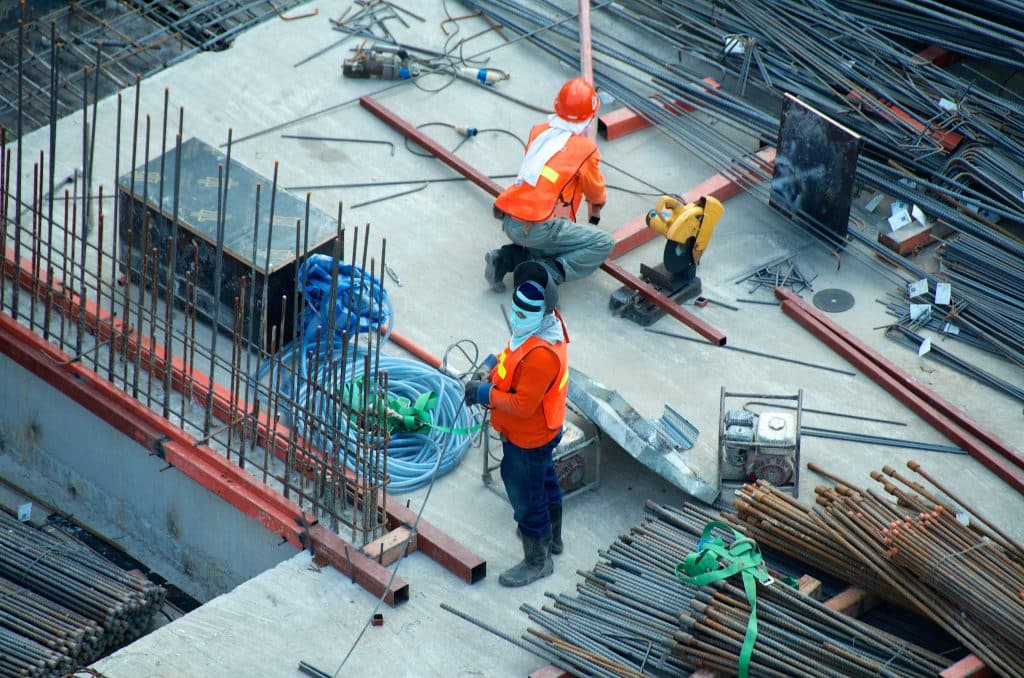
Labor Law § 240(1) Seeks to Protect Construction Workers From Dangerous Elevated Structures at Construction Sites But This Recent Decision Highlights the Challenges of the Labor Law and the Need for a Lawyer with Experience!
Imagine this:
This July 9, 2025, appeals court decision highlighted the judiciary’s stringent application of summary judgment deadlines. Warning: If Your Motion is Filed Late, Expect that It Will Be Denied. Don’t Let this Happen to You!

Construction work is physically difficult and can also be dangerous. New York State has special laws that apply only to construction workers and are designed to enhance construction worker safety on job sites. But as this recent decision from the Appellate Division, Second Department appeals court demonstrates, applying these laws can be surprisingly complex – and the difference between a win and a loss can hinge on understanding subtle distinctions in the law.
Let’s break down what happened….
The Initial Lawsuit: Seeking Protection Under NY Labor Law
Although our law firm was not involved in this case, it is worth discussing. In a recent (July 2025) decision, the New York appeals court presiding over the lower Hudson Valley, including Westchester, affirmed a lower court decision that emphasized the need for procedural timeliness and the substantive requirement that summary judgment must be denied if there are disputed material facts. These important lessons unfolded in a case wherein the plaintiff, an injured construction worker, claimed that the defendants, i.e., the property owner and general contractor, violated New York’s Labor Law § 240(1), commonly known as the “Scaffold Law.” The July 9, 2025, appeals court decision highlighted the judiciary’s stringent application of summary judgment deadlines while simultaneously delving into the factual intricacies required to prevail on a claim under Labor Law § 240’s unique statutory provisions.
The case provides a valuable lesson for litigants on both sides of a personal injury action, emphasizing that a meritorious claim or defense can be defeated by procedural missteps, and that success on the merits often hinges on a granular analysis of the facts.
Procedural History: A Tale of Two Motions
The case arose out of a construction site accident on January 21, 2019. The plaintiff, German Jimenez Alzate, a carpenter, was injured when he fell from a significant height while working on the roof of a detached garage. In June 2019, Jimenez Alzate commenced a personal injury action against the general contractor, Sullivan Group, Inc., alleging, among other claims, a violation of Labor Law § 240(1). (By the time that the motions were submitted for decision to the lower court, the plaintiff had withdrawn his claims alleging negligence, a violation of Labor Law § 200 and a violation of Labor Law § 241[6].)
Following discovery, the general contractor, Sullivan Group, filed a timely motion for summary judgment in April 2022, seeking dismissal of the plaintiff’s lawsuit. Two months later, in June 2022, the plaintiff filed his own motion, an untimely motion for partial summary judgment on the issue of liability under Labor Law § 240(1). On August 31, 2022, the Supreme Court, Westchester County, with Justice David S. Zuckerman presiding, denied both motions.
Both parties appealed the trial court’s decision. The plaintiff (injured construction worker) appealed the denial of his motion for summary judgment, while the defendant (general contractor) appealed the denial of its motion for a complete dismissal of the entire lawsuit. In its decision, the Appellate Division affirmed the lower court’s order in its entirety, agreeing that there are disputed facts which can only be sorted out by a jury. (Remember, a judge cannot resolve disputed facts in favor of one side or the other. Only a jury can resolve issues where the facts are in dispute.)
The Factual Dispute: A Tree Branch and a Collapsed Beam
According to the plaintiff’s version of events, at the time of the accident, Jimenez Alzate was engaged in erecting rafters for a new roof on a detached garage. He alleged that his work was impeded by a tree branch, and in the course of attempting to cut it, the rafter he was standing on collapsed, causing him to fall to the ground and sustain serious injuries. The plaintiff contended that this scenario presented a clear violation of Labor Law § 240(1) due to the absence of adequate safety devices to protect Jimenez Alzate from an elevation-related risk.
The defendant, in its motion papers, presented a different narrative. Sullivan Group argued that Jimenez Alzate’s decision to cut the tree branch was an unnecessary deviation from his assigned task of carpentry. They asserted that Jimenez Alzate was not instructed to perform any tree trimming and that his actions were the sole proximate cause of his injuries. Sullivan Group further contended that Jimenez Alzate had access to a ladder that he could have used, and his failure to do so constituted a “recalcitrant worker” defense.
Legal Analysis: Procedural Bars and Substantive Burdens
The appellate court’s decision rested on two distinct pillars: the procedural untimeliness of the plaintiff’s motion and the defendant’s failure to meet its prima facie burden on its own motion. Each of these issues are important, and the resolution of each issue provides a great lesson for the practitioner. And we get to discuss some of the complexities of litigating a Labor Law § 240(1) claim.
The Plaintiff’s Untimely Motion: A Lesson in “Good Cause”
The appellate court’s denial of the plaintiff’s motion for summary judgment was based squarely on procedural grounds. The court noted that the plaintiff’s motion was filed “months after the deadline imposed by the court for the filing of summary judgment motions had elapsed.” Under New York’s Civil Practice Law and Rules (CPLR) § 3212(a), a court may set a deadline for the filing of summary judgment motions, and any motion filed after that date must be accompanied by a showing of “good cause” for the delay.
The seminal case on this issue is Brill v. City of New York, where the Court of Appeals held that a motion filed past the deadline is too late. At a minimum, a plaintiff must demonstrate, in his/her motion papers an excuse for filing late. This requirement to show “good cause” requires a satisfactory explanation for the untimeliness itself, not simply that the motion is meritorious and non-prejudicial. A mere “law office failure” is generally insufficient to establish good cause.
In Jimenez Alzate, the plaintiff failed to offer any explanation for his delay in filing his motion. This failure proved fatal to his application. The appellate court’s opinion in this regard aligns with a consistent line of cases that strictly enforce summary judgment deadlines to ensure the efficient and orderly progression of litigation. The appeals court explicitly rejected the plaintiff’s argument that his late motion should be considered because it raised issues “nearly identical” to the defendant’s timely motion, finding that the motions addressed “substantively different aspects” of the alleged Labor Law § 240(1) violation. This distinction underscores the court’s reluctance to carve out exceptions to the timeliness requirement, even in the face of potentially overlapping legal arguments.
Defendant’s Motion: The Difficulty in Showing That All Material Facts Are Undisputed
While the plaintiff’s motion was procedurally barred, the defendant’s motion failed on substantive grounds. The appellate court found that Sullivan Group had not met its prima facie burden of establishing its entitlement to judgment as a matter of law. Remember: to succeed on a motion for summary judgment, the moving party must present evidence in an admissible form that demonstrates that all the material facts necessary to decide the motion are undisputed.
In addition, the defendant’s primary argument was that, at the time of the incident, Jiminez Alzate was not engaged in an activity protected under Labor Law § 240(1). Specifically, the general contractor argued that Jiminez Alzate was cutting a tree branch when he fell, and tree cutting is not activity covered by the Labor Law statute. In contrast, Jiminez Alzate argued that, in order to perform his carpenter’s work on the roof, he was required to remove the limb that impeded his ability to work. Thus, the injured construction worker insisted, on the specific facts of this case, the tree limb removal activity was subject to Labor Law 240 § (1) protection.
In this case, German Jimenez Alzate v. Sullivan Group, Inc., the trial court had ruled that the defendant had failed to meet its prima facie burden of presenting undisputed facts which, when taken together, conclusively established that the plaintiff was not engaged in a protected activity. The trial court noted that there were triable issues of fact as to whether tree trimming was truly a deviation from the work or an ancillary and necessary part of the protected activity, i.e., the roof construction. Case law had established that activities that are “ancillary to” or an “integral part” of a covered construction project fall within the ambit of Labor Law § 240(1). Whether cutting a branch that is physically interfering with the installation of a roof qualifies as an integral part of the construction activity is a fact-intensive inquiry that is generally left for a jury to decide.
Furthermore, the general contractor’s assertion that Jimenez Alzate had access to an adequate safety device in the form of a ladder was not sufficient to grant summary judgment. For the “sole proximate cause” or “recalcitrant worker” defense to apply, the defendant must show that the provided safety device was adequate for the specific task at hand and that the plaintiff was specifically instructed to use it for that purpose. Here, a jury could reasonably find that a ladder was not an adequate safety device for performing carpentry work on a roof, and that the true cause of the accident was the collapse of the rafter, a structural failure for which the general contractor could be held responsible. The court’s denial of the defendant’s motion, based on the unique facts of this case, signifies the high burden of proof required to succeed on a “sole proximate cause” defense, particularly on motion prior to trial.
Conclusion: A Roadmap for Labor Law Litigants
The Jimenez Alzate decision serves as a powerful reminder to the lawyers who represent injured construction workers that you must pay careful attention to deadlines. The procedural requirements of the CPLR, particularly the timeliness of dispositive motions, are not mere suggestions but are strictly enforced mandates that can have case-dispositive consequences. The plaintiff’s failure to adhere to the court-ordered deadline for his summary judgment motion, without a showing of good cause, precluded a potentially favorable ruling on the merits.
A second take-away from this case is the reminder that the substantive provisions of the Scaffold Law, while imposing strict liability, are not without their complexities. The “sole proximate cause” defense, though difficult to establish, remains a viable tool for defendants. However, as the Jimenez Alzate court demonstrated, a defendant seeking to avail itself of this defense must be prepared to present clear and convincing evidence that eliminates all triable issues of fact regarding the plaintiff’s conduct and the adequacy of the safety devices provided. The factual nuances as to whether an activity is ancillary to the main work or integral to the main work; and the factual nuances as to whether the provided safety device is truly adequate will often be questions that cannot be ruled on as a matter of law but instead must be decided by a jury.
Ultimately, Jimenez Alzate v. Sullivan Group, Inc. reinforces the principle that in the high-stakes arena of New York construction litigation, both procedural diligence and a thorough understanding of the substantive law are indispensable for achieving a successful outcome. The case now proceeds to trial, where a jury will be tasked with untangling the factual disputes that the appellate court rightly determined were not ripe for summary disposition.
How Does an Experienced Construction Accident Law Firm Change the Outcome?
Our law firm was not involved in this case. However, we discuss this new decision from the Appellate Division, Second Department because it is a perfect example of why injured construction workers need experienced legal representation that truly understands the nuances of New York Labor Law.
Cases like German Jimenez Alzate’s underscore why you need a law firm that specializes in New York construction accident injury law. At Martin + Colin, P.C., we have a deep understanding of these statutes, the constantly evolving case law, and the arguments that win. We know how to analyze the unique facts of your situation and build the strongest possible case.
Injured on a Construction Site? You Need an Experienced Attorney
If you or a loved one has been injured in a construction accident, the stakes are too high to go it alone or trust your case to a firm that does not specialize in this area. The facts need to be highlighted in the manner most favorable to your case, and the laws can be subject to different interpretations. As this recent case shows, the path to justice can have unexpected twists and turns.
Contact Martin + Colin, P.C. today for a free consultation. We will listen to your story, explain your rights, and fight to get you the maximum compensation you deserve.
This discussion of a recent appeals court decision was one of a series of posts demonstrating why your construction accident case needs a law firm known for both legal scholarship as well as courtroom experience.
The injury attorneys at Martin + Colin, P.C., headquartered in White Plains, handle construction accident cases and workers compensation claims. If you have been hurt in an accident due to the negligence of another person or firm, Martin + Colin, P.C. may be able to help. Please call (914) 771 7711 or reach out to us using the ‘Contact Us’ form on this webpage.
Call us now at (914) 771 7711 and let us apply our expertise to your case.

Injured and Overwhelmed?
An injury caused by someone else’s negligence can turn your life upside down—medical bills pile up, paychecks stop, and the pain feels endless. You deserve more than just compensation; you deserve justice, security, and peace of mind.
At Martin + Colin, P.C., we’ve helped thousands of injured clients recover the full financial compensation they’re owed—for medical expenses, lost income, and the emotional toll of their suffering. Whether it’s a car accident, workplace injury, or slip and fall, our proven track record speaks for itself: we win cases, and we win big.
Why Clients Trust Us:
✔ No Fees Unless We Win – You pay $0 unless we secure your settlement.
✔ Aggressive Advocacy – We push back against insurance companies who lowball or delay claims.
✔ Compassionate Support – From your first call to final payout, we guide you with clarity and care.
✔ Maximum Results – We leverage decades of experience to build unbeatable cases.
Time is critical. Evidence fades, deadlines loom, and insurers profit by pressuring victims into unfair settlements. Don’t settle for less—let us fight for what’s right.
Take Your First Step Toward Justice—For Free.
Focus on healing. We’ll handle the rest.

Bill Martin
I founded Martin+Colin, P.C., a White Plains personal injury firm that has recovered millions of dollars for injured people across New York. Over my career, I've represented clients in some of the most serious accident cases the state sees: construction and demolition worker injuries, workplace accidents, and motor vehicle crashes involving cars, trucks, motorcycles, and pedestrians. My practice also covers premises liability and landlord negligence claims, from slip-and-fall and knockdown injuries to harm caused by broken steps and missing handrails. In every case, my focus is the same: holding negligent parties accountable and making sure injured clients and their families get the full compensation they're owed. My clients work with me because I combine a proven record of results with a straightforward, no-nonsense approach. I explain the process in plain terms, I fight hard for every client, and I treat each case with the attention it deserves. If you've been hurt in an accident, contact me and the team at Martin+Colin, P.C. for a free consultation.


