
slipping on the steps of a work truck does not qualify as a labor law claim
We Are Westchester County's Premier Construction Accident and Personal Injury Law Firm. We Can Help You!
Recent Appeals Court Decision!
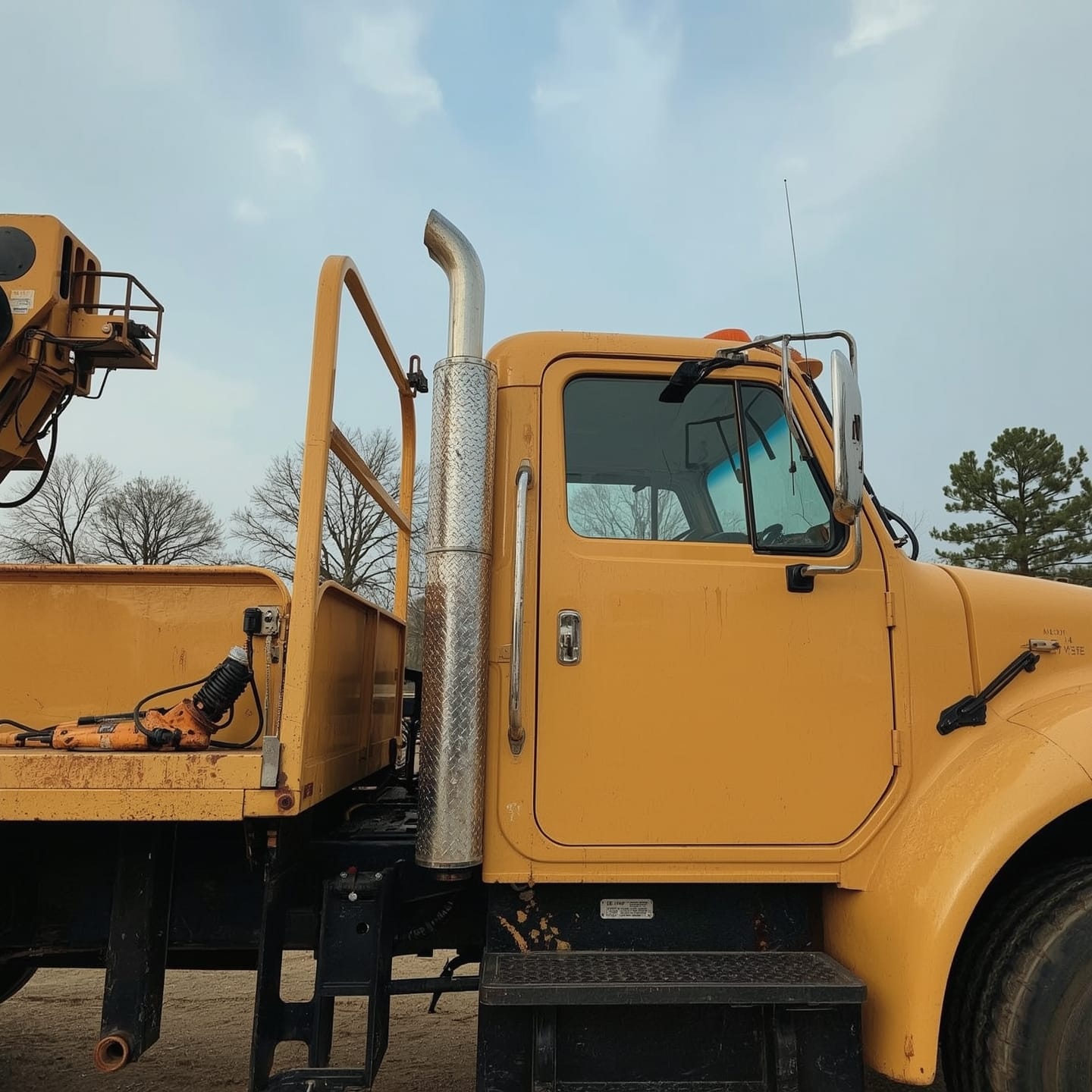
A Recent Decision of the NYS Appellate Division Rejected A Construction Worker’s Effort to Apply the Labor Law to His Slip and Fall From a Truck Step.
The Appeals Court Determination:
Even though the construction worker fell five feet to the ground, the appeals court ruled that it was only an “Ordinary Workplace Hazard” AND NOT the type of “Gravity Related Risk” covered by Labor Law § 240(1); and
* * *
Even though the NYS Industrial Code requires non-slippery conditions, the Court said that the specific code provision only requires a non-slippery “Floor, Passageway or Walkway” and a truck step does not qualify as a floor, passageway or walkway. T therefore, there was no violation of Labor Law § 241(6) here.
This Case is Another Perfect Example ...
… why injured construction workers need legal representation that truly understands the nuances of the NYS Labor Law.

The injury attorneys at Martin + Colin, P.C., headquartered in White Plains, New York handle construction accident cases and workers compensation claims. If you have been hurt in an accident due to the negligence of another person or firm, Martin + Colin, P.C. may be able to help.
MEET ...
“CONSTRUCTION WORKER VINCENZO” AND THE STORY OF HIS FATEFUL FALL
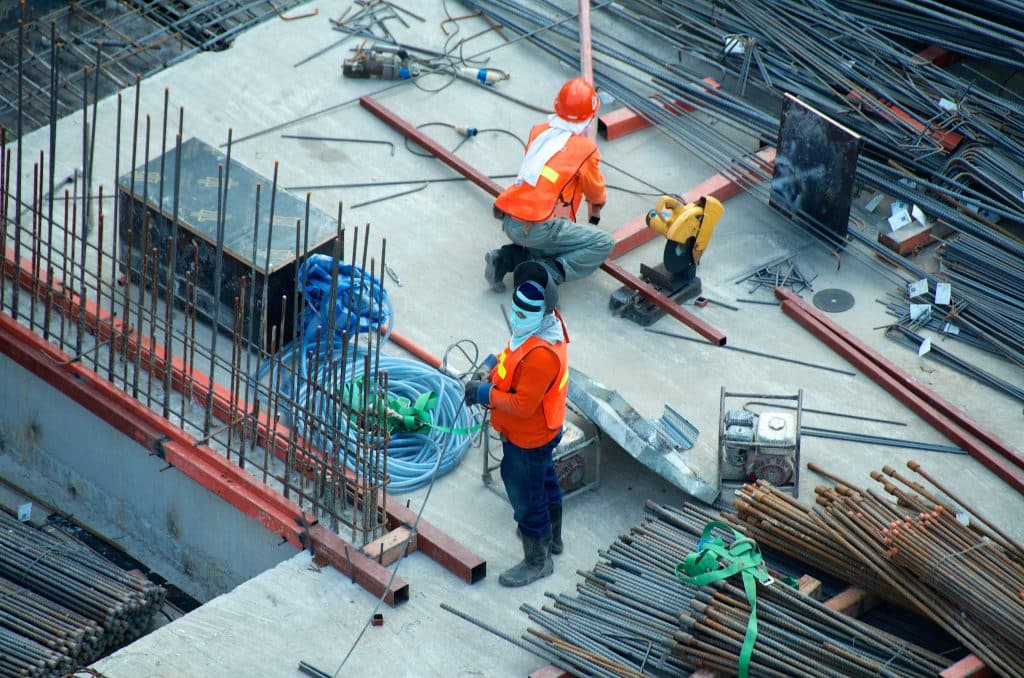
The Labor Law Statutes Prohibit Slippery Elevated Work Surfaces But This Recent Decision Highlights the Challenges of the Labor Law and the Need for a Lawyer with Experience!
Imagine this:
“Construction Worker Vincenzo” (as we’ll call him) is on a job site replacing an existing roof with a new one at a public school building in Westchester County. The task he was assigned? Walk over to the work truck, climb into the cab, remove tools and bring them to the boss. It was a sunny, dry day. With the tools in hand, Vincenzo attempted to climb down from the truck cab but as he did so, his right foot slips on the top step and he falls approximately five feet to the ground, causing Vincenzo serious injuries.
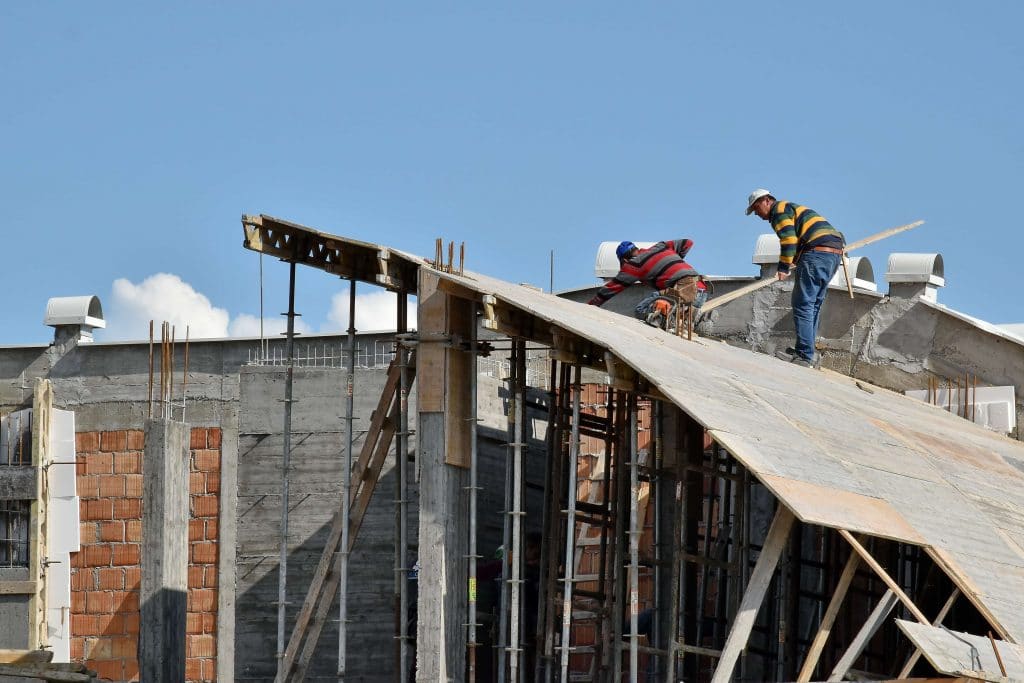
Construction work is physically difficult and can also be dangerous. New York State has special laws that apply only to construction workers and are designed to enhance construction worker safety on job sites. But as this recent decision from the Appellate Division, Second Department appeals court demonstrates, applying these laws can be surprisingly complex – and the difference between a win and a loss can hinge on understanding subtle distinctions in the law.
Although our law firm was not involved in this case, let’s take a look and break down what happened….
The Initial Lawsuit: Seeking Protection Under NY Labor Law
Vincenzo did what any injured construction worker should: he sought to hold the property owner, a local public school district, accountable for dangerous work site that caused his devastating injuries. In New York, a property owner can be held responsible for construction worker injuries even if the property owner was not directly supervising the specific task that led to the accident. This is because the law recognizes the inherent dangers of construction work and places a strong emphasis on site safety. The public school district then commenced its own third-party action against Vincenzo’s employer, as the employer was directly supervising the tasks, for common law and contractual indemnification.
Vincenzo, through his attorneys, filed a lawsuit asserting claims under three key sections of New York Labor Law:
Labor Law § 200: This law codifies the common-law duty of owners and contractors to provide a safe place to work.
Labor Law § 240(1) (The “Scaffold Law”): This is a powerful law. It imposes strict liability (meaning fault doesn’t have to be proven in the usual way) on owners and general contractors for injuries caused by elevation-related risks. Think falls from ladders, scaffolds, or other heights, or injuries from falling objects.
Labor Law § 241(6): This law requires owners and contractors to comply with specific safety rules and regulations detailed in New York State’s Industrial Code for construction, demolition, and excavation work.
Round One: The Trial Court Shuts Down Vincenzo’s Case
On July 10, 2019, Vincenzo, an employee of Happy Day General Construction, Inc. (“Happy Day”), was working as a laborer on a roof demolition and replacement project at the Daniel Webster Elementary School, owned by Mount Rainier UFSD. Vincenzo had been employed by Happy Day for nineteen years, though this was his first day at this particular job site.
According to Vincenzo’s deposition testimony, his Happy Day supervisor, known as “Calypso,” instructed him to retrieve tools and materials from a Happy Day-owned crane truck parked in the school’s parking lot. Vincenzo had been performing demolition work on the roof for a few hours prior to this instruction. He testified that Calypso provided all his instructions on site.
Vincenzo walked from the school building, across a dry concrete sidewalk (there was no precipitation), to the truck. He ascended two steps attached to the truck’s cab to enter and retrieve the items, encountering no difficulty. While exiting, using the same two steps, Vincenzo placed his right foot on the top step. He stated that as soon as his right foot made contact with this step, he fell. His left foot was still inside the cab at the moment of the fall. He fell approximately five feet to the ground.
Vincenzo attributed his fall to several factors. He testified that the truck steps were wet and dirty at the time of the accident. He also claimed the crane mounted on the truck was in motion and vibrating when he fell. Initially, he testified that only the vibration caused his fall, but later amended this to state that both the vibration and the dampness of the steps contributed to his slip.
The defendants presented a slightly different, or at least supplemented, factual narrative in their motion papers. They highlighted Vincenzo’s admission that a handrail was available on the truck near the steps, which he did not use. Furthermore, they submitted a statement from Armand Lanutti, identified as the Happy Day foreman and an eyewitness. Lanutti asserted that the crane was not in operation at the time of the accident and that Vincenzo fell because he lost his balance on the steps. He also stated the parking lot where Vincenzo fell was in a “perfectly safe condition.”
The Procedural History
Commencement of Action: Vincenzo initiated a personal injury lawsuit against Mount Rainier UFSD and Daniel Warren Elementary School, alleging violations of:
Labor Law § 240(1) (the “Scaffold Law”);
Labor Law § 241(6) (requiring safe construction sites pursuant to specific Industrial Code provisions);
Labor Law § 200 (codifying common-law duty to provide a safe workplace); and
Common Law Negligence.
Third-Party Action: The School District commenced a third-party action against Happy Day General Construction, Inc. (Vincenzo’s employer) for common law and contractual indemnification.
Defendants’ Motion for Summary Judgment (Motion Seq. 3): Mount Rainier UFSD moved to dismiss Vincenzo’s complaint in its entirety (NYSCEF Doc. No. 44, Memorandum of Law filed November 8, 2022). They argued that § 240(1) was inapplicable as the fall was not from a sufficient height or due to a gravity-related risk covered by the statute; that § 241(6) failed because the Industrial Code provisions cited by Vincenzo were either not violated or inapplicable; and that § 200 and common law negligence claims failed because they neither supervised Vincenzo’s work nor created or had notice of any dangerous condition.
Plaintiff’s Cross-Motion for Partial Summary Judgment (Motion Seq. 4): Vincenzo cross-moved for summary judgment on the issue of liability under Labor Law §§ 240(1) and 241(6) (specifically predicated on 12 NYCRR 23-1.7(d) and (e)(2)).
Reply and Opposition: The parties submitted further papers. Mount Rainier UFSD filed a Reply Memorandum in further support of their motion (NYSCEF Doc. No. 69, January 27, 2023) and a Memorandum in Opposition to Plaintiff’s Cross-Motion (NYSCEF Doc. No. 79, January 27, 2023).
Supreme Court Decision (Alexandra Murphy, J., April 24, 2023; NYSCEF Doc. No. 88/89):
Granted the defendants’ motion for summary judgment, dismissing the complaint in its entirety; and
Denied the plaintiff’s cross-motion for partial summary judgment.
Appeal: Vincenzo appealed the Supreme Court’s order to the Appellate Division, Second Judicial Department, specifically challenging the dismissal of his § 240(1) claim and his § 241(6) claim insofar as it was predicated on 12 NYCRR 23-1.7(d) and (e)(2).
Appellate Division Decision (May 14, 2025): The Appellate Division affirmed the Supreme Court’s order insofar as appealed from, with costs. Thus, the plaintiff lost his case.
The Legal Framework: New York Labor Law
Labor Law § 240(1) (Scaffold Law): This statute imposes absolute, non-delegable liability on owners and general contractors for failing to provide or erect proper safety devices (scaffolds, hoists, stays, ladders, etc.) to protect workers from elevation-related hazards during the erection, demolition, repairing, altering, painting, cleaning, or pointing of a building or structure. A violation that proximately causes injury leads to liability, irrespective of the worker’s own negligence (in other words, comparative negligence is not a defense). The key to prevailing on this claim is whether the injury resulted from a “gravity-related risk” or “elevation differential.”
Labor Law § 241(6): This section imposes a non-delegable duty on owners and contractors to provide “reasonable and adequate protection and safety” to workers in areas where construction, excavation, or demolition work is being performed. To establish liability, a plaintiff must demonstrate a violation of a specific, concrete provision of the New York State Industrial Code, and that this violation was a proximate cause of the worker’s injury. Comparative negligence is a defense under § 241(6).
Labor Law § 200 and Common Law Negligence: Labor Law § 200 codifies the common-law duty of an owner or general contractor to provide a safe place to work. Liability can arise in two ways:
Dangerous Condition on Premises: If the injury arises from a dangerous condition on the premises, the owner / general contractor may be liable if they created the condition or had actual or constructive notice of it and failed to remedy it.
Means and Methods of Work: If the injury arises from the manner in which the work is performed, the owner/contractor may be liable only if they had the authority to supervise or control the injury-producing work.
Analysis of Labor Law § 240(1) Claim
Plaintiff’s Position: Vincenzo argued that his fall from the truck step, a height of approximately five feet, while the crane was allegedly vibrating, constituted an elevation-related hazard for which the defendants failed to provide adequate protection. He relied on cases such as Boice v. Jegarmount Realty Corp. (fall from forklift platform), Curley v. Gateway Communs., Inc. (fall while unloading pipes from truck), and Binetti v. MK West Street Co. (fall from ladder).
Defendants’ Position: Mount Rainier UFSD contended that Vincenzo’s fall was not the type of “gravity-related risk” envisioned by § 240(1). They characterized it as an “ordinary workplace hazard” associated with stepping down from a vehicle. They cited numerous cases where falls from trucks or similar low heights were found outside the scope of § 240(1), such as Bond v. York Hunter Constr., Inc., Scarso v. M.G. General Constr. Corp., and Lavore v. Kir Munsey Park 020, LLC. They argued that no specific safety device enumerated in § 240(1) was missing or would have prevented such a fall, especially since a handrail was available.
Courts’ Holdings and Rationale:
Supreme Court (Murphy, J.): The court found that the defendants demonstrated prima facie entitlement to dismissal. It cited Scarso and Bond for the proposition that the risk of alighting from a construction vehicle is not an elevation-related risk contemplated by § 240(1). The plaintiff failed to raise a triable issue of fact in opposition. Therefore, the case is dismissed.
Appellate Division: The Second Department agreed, holding that the “approximately five-foot descent from the truck’s top step to the ground was not an elevation-related risk for purposes of Labor Law § 240(1).” The appeals court relied on Court of Appeals precedent like Toefer v. Long Is. R.R. and Bond, as well as its own precedent in Lavore and Scarso.
The core of the § 240(1) analysis hinges on the distinction between a fall from a significant elevation due to a lack of, or defect in, a required safety device, and a fall occurring due to a more commonplace risk. The courts consistently find that merely falling from something does not automatically trigger § 240(1). The fall must be a direct consequence of exposure to a hazard that the statute is designed to protect against – i.e., risks inherent in working at heights where specialized equipment is needed. Exiting a truck cab, even if it’s a few feet off the ground, is generally treated as an ordinary risk, akin to using stairs, unless very specific circumstances elevate it to a § 240(1) hazard (e.g., if the truck bed itself is being used as an elevated work platform for a covered activity). The alleged crane vibration, even if true, did not transform the act of exiting the cab into a special elevation-related hazard covered by the statute. The presence of an unused handrail further weakened the plaintiff’s argument that he was deprived of necessary protection.
Analysis of Labor Law § 241(6) Claim
Plaintiff’s Position: Vincenzo predicated his § 241(6) claim, and his cross-motion, on alleged violations of two Industrial Code provisions:
12 NYCRR 23-1.7(d) (Slipping Hazards): This section requires employers to keep floors, passageways, walkways, scaffolds, platforms, or other elevated working surfaces free from slippery conditions (ice, snow, water, grease, etc.). Vincenzo argued the wet and dirty truck steps constituted a violation of this rule. He cited Beltrone v. City of New York (oil on crane deck) and Fassett v. Wegmans Food Markets, Inc. (mud on backhoe battery cover used for access).
12 NYCRR 23-1.7(e)(2) (Working Areas – Tripping and Other Hazards): This section mandates that parts of floors, platforms, and similar areas where persons work or pass by must be kept free from accumulations of dirt, debris, scattered tools, and sharp projections. Vincenzo argued the truck steps or cab area constituted such a “working area.”
Defendants’ Position: Mount Rainier UFSD argued that these Industrial Code sections were inapplicable to the facts:
Re: 23-1.7(d): The truck steps were not a “floor, passageway, walkway, scaffold, platform or other elevated working surface” within the meaning of the regulation. They cited cases like Blysma v. County of Saratoga (slipping hazards regulation expressly applied to specific work areas, not common areas) and St. John v. Westwood-Squibb Pharmaceuticals, Inc. (regulation not applicable to injury in a parking lot).
Re: 23-1.7(e)(2): This section primarily addresses “tripping” hazards, whereas Vincenzo alleged a “slip.” Furthermore, the truck steps, used for ingress/egress to retrieve supplies, did not constitute a “working area” or “passageway” as contemplated.
Courts’ Holdings and Rationale:
Supreme Court (Murphy, J.): The court found that the defendants demonstrated that the truck steps were not a “floor, passageway, walkway, scaffold, platform or other elevated working surface” under 23-1.7(d), nor a “work area” under 23-1.7(e)(2). The plaintiff failed to raise a triable issue of fact in opposition or to oppose the dismissal of claims based on other Industrial Code sections pleaded. The case was thrown out.
Appellate Division: The Second Department agreed (affirmed).
Regarding 12 NYCRR 23-1.7(d), it held the provision inapplicable “as truck steps are not a ‘floor, passageway, walkway, scaffold, platform or other elevated working surface’ within the meaning of that section (see Bond v York Hunter Constr., Inc.).”
Regarding 12 NYCRR 23-1.7(e)(2), it found this provision inapplicable because it “protects workers from tripping hazards,” and Vincenzo testified that he “slipped” (citing Dyszkiewicz v City of New York; Keener v Cinalta Constr. Corp.; Costa v State of New York).
The § 241(6) analysis is highly dependent on the precise language of the cited Industrial Code provision and its applicability to the specific facts. Courts interpret these provisions narrowly. For 23-1.7(d), the list of covered locations is exhaustive, and truck steps generally do not fit. For 23-1.7(e)(2), the distinction between a “slip” and a “trip” is critical, as this section is aimed at preventing trips over debris or projections, not slips on surfaces. Vincenzo’s consistent testimony that he “slipped” proved fatal to this part of his claim at the appellate level.
Analysis of Labor Law § 200 and Common Law Negligence Claims
Plaintiff’s Position: Vincenzo likely argued that the wet and dirty truck steps constituted a dangerous condition for which the School District was responsible, or that the School District maintained some level of supervision over the work site.
Defendants’ Position:
Dangerous Condition: Mount Rainier UFSD argued they neither created nor had actual or constructive notice of the alleged wet and dirty condition on the Happy Day truck steps. They emphasized that any such condition was transient, likely caused by Vincenzo or his co-workers tracking mud, and existed for only a very short time (“three minutes” per plaintiff’s testimony about when the steps became wet).
Means and Methods: They asserted they did not supervise or control Vincenzo’s work; his supervisor was Calypso from Happy Day.
Supreme Court’s Holding and Rationale (Murphy, J.):
The court agreed with the defendants. To the extent the accident arose from a dangerous condition (the steps), the School District demonstrated it did not create the condition nor have actual or constructive notice, especially given Vincenzo’s testimony that the water and dirt were there for only “three minutes” before his fall.
To the extent the accident arose from the means and methods of work, Vincenzo himself testified that he received all instructions from his Happy Day supervisor, Calypso. This negated any claim that the School District supervised or controlled his work.
(The Appellate Division did not address these claims as the appeal was limited by Vincenzo to the § 240(1) and specific § 241(6) predicates.)
This part of the holding underscores the difficulty in holding a property owner liable under § 200 when the injury-causing condition is on equipment belonging to a contractor (Happy Day’s truck) and is transient, or when the work is clearly supervised by the contractor’s own personnel. Constructive notice requires that a defect be visible and apparent and exist for a sufficient length of time prior to the accident to permit the defendant to discover and remedy it. Three minutes is generally insufficient.
Summary of the Entire Appeals Court Decision
The § 240(1) claim failed because the type of fall was not covered, regardless of crane vibration. The § 241(6) claims failed due to the inapplicability of the specific language of the cited Industrial Code sections to truck steps and a slipping accident. The § 200 claim failed on lack of notice/creation and lack of supervision, elements often determinable from the plaintiff’s own testimony.
Conclusion
The dismissal of Vincenzo’s complaint, affirmed by the Appellate Division, aligns with established New York Labor Law jurisprudence. The courts found that his unfortunate fall while exiting a truck did not trigger the extraordinary protections of Labor Law § 240(1), as it was deemed an ordinary workplace risk rather than a special elevation-related hazard contemplated by the statute. Similarly, his Labor Law § 241(6) claims failed because the specific Industrial Code provisions he relied upon were found inapplicable to the factual circumstances of his accident—truck steps not being an enumerated “passageway” or “work surface” for slipping hazards, and the alleged “slip” not constituting a “trip” under the relevant provision for tripping hazards. Finally, the Labor Law § 200 and common law negligence claims were properly dismissed due to the School District’s lack of creation or notice of the alleged transient dangerous condition on the contractor’s equipment and its lack of supervision or control over the plaintiff’s work. This case serves as a reminder of the specificity required to sustain Labor Law claims and the judiciary’s role in delineating the scope of these powerful statutory protections.
How Does an Experienced Construction Accident Law Firm Change the Outcome?
Our law firm was not involved in this case. However, we discuss this new decision from the Appellate Division, Second Department because it is a perfect example of why injured construction workers need experienced legal representation that truly understands the nuances of New York Labor Law.
Cases like Vincenzo’s underscore why you need a law firm that specializes in New York construction accident injury law. At Martin + Colin, P.C., we have a deep understanding of these statutes, the constantly evolving case law, and the arguments that win. We know how to analyze the unique facts of your situation and build the strongest possible case.
Injured on a Construction Site? You Need an Experienced Attorney
If you or a loved one has been injured in a construction accident, the stakes are too high to go it alone or trust your case to a firm that does not specialize in this area. The facts need to be highlighted in the manner most favorable to your case, and the laws can be subject to different interpretations. As this recent case shows, the path to justice can have unexpected twists and turns.
Contact Martin + Colin, P.C. today for a free consultation. We will listen to your story, explain your rights, and fight to get you the maximum compensation you deserve.
This discussion of a recent appeals court decision was one of a series of posts demonstrating why your construction accident case needs a law firm known for both legal scholarship as well as courtroom experience.
The injury attorneys at Martin + Colin, P.C., headquartered in White Plains, handle construction accident cases and workers compensation claims. If you have been hurt in an accident due to the negligence of another person or firm, Martin + Colin, P.C. may be able to help. Please call (914) 771 7711 or reach out to us using the ‘Contact Us’ form on this webpage.
Call us now at (914) 771 7711 and let us apply our expertise to your case.

Injured and Overwhelmed?
An injury caused by someone else’s negligence can turn your life upside down—medical bills pile up, paychecks stop, and the pain feels endless. You deserve more than just compensation; you deserve justice, security, and peace of mind.
At Martin + Colin, P.C., we’ve helped thousands of injured clients recover the full financial compensation they’re owed—for medical expenses, lost income, and the emotional toll of their suffering. Whether it’s a car accident, workplace injury, or slip and fall, our proven track record speaks for itself: we win cases, and we win big.
Why Clients Trust Us:
✔ No Fees Unless We Win – You pay $0 unless we secure your settlement.
✔ Aggressive Advocacy – We push back against insurance companies who lowball or delay claims.
✔ Compassionate Support – From your first call to final payout, we guide you with clarity and care.
✔ Maximum Results – We leverage decades of experience to build unbeatable cases.
Time is critical. Evidence fades, deadlines loom, and insurers profit by pressuring victims into unfair settlements. Don’t settle for less—let us fight for what’s right.
Take Your First Step Toward Justice—For Free.
Focus on healing. We’ll handle the rest.

Bill Martin
I founded Martin+Colin, P.C., a White Plains personal injury firm that has recovered millions of dollars for injured people across New York. Over my career, I've represented clients in some of the most serious accident cases the state sees: construction and demolition worker injuries, workplace accidents, and motor vehicle crashes involving cars, trucks, motorcycles, and pedestrians. My practice also covers premises liability and landlord negligence claims, from slip-and-fall and knockdown injuries to harm caused by broken steps and missing handrails. In every case, my focus is the same: holding negligent parties accountable and making sure injured clients and their families get the full compensation they're owed. My clients work with me because I combine a proven record of results with a straightforward, no-nonsense approach. I explain the process in plain terms, I fight hard for every client, and I treat each case with the attention it deserves. If you've been hurt in an accident, contact me and the team at Martin+Colin, P.C. for a free consultation.


