
The Best Law Firms Only File Cases that Can Be Won
We Are Westchester County's Premier Premises Liability Accident and Personal Injury Law Firm. We Can Help You!
Recent Appeals Court Decision!
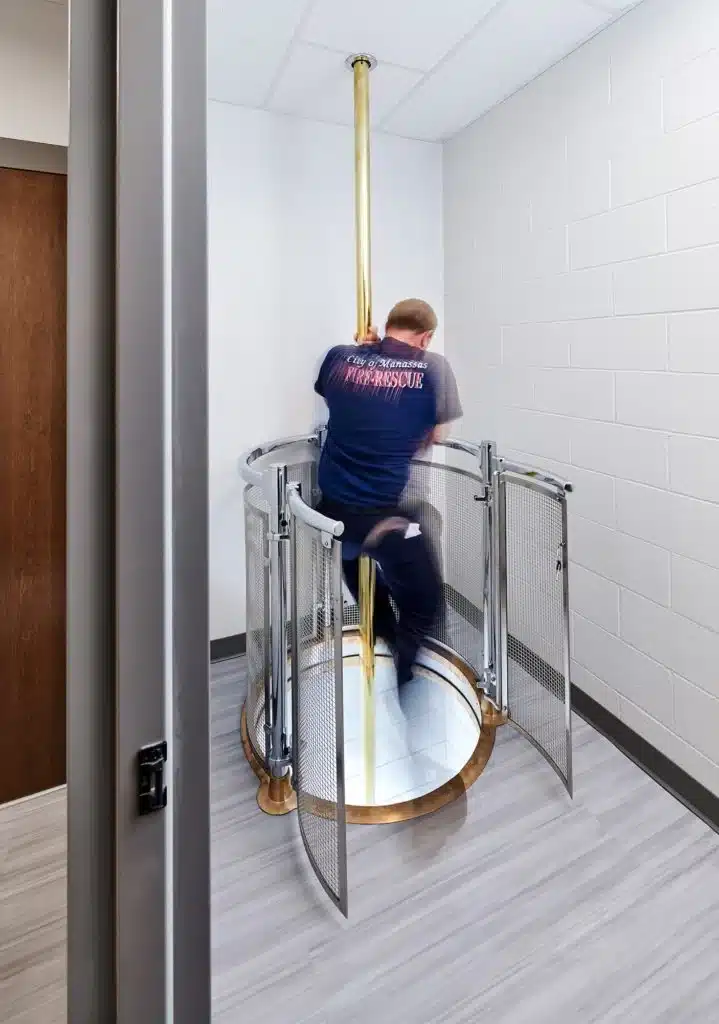
A Recent Decision of the NYS Appellate Division Rejected A Lawsuit By a Suffolk County Man Who Sued His Local Fire District After He Went Over to his Local Firehouse on a Sunday during football season to watch a game with a friend, a volunteer firefighter. After consuming alcohol, the Suffolk County man, who had no firefighting training, attempted to slide down the fire pole inside the firehouse, crashed down onto the floor and sustained serious injuries.
The 2025 Appeals Court Determination:
The injured Suffolk County man engaged in very risky behavior at the firehouse and had only himself to blame for his injuries.
Case dismissed!

The injury attorneys at Martin + Colin, P.C., headquartered in White Plains, New York handle premises liability cases like the one discussed on this page. If you have been hurt during an unfortunate mishap due to the negligence of another person or firm, Martin + Colin, P.C. may be able to help.
MEET ...
Suffolk County Football Fan Brian Winslow And the Unfortunate Story of His
Horrible, No Good, Very Bad Day
The injured Suffolk County football fan urged the court to let him present his case to a jury because published materials from the U.S. Fire Administration (USFA) and OSHA deemed fire poles dangerous if not properly guarded and used. But the Judge’s Refusal to Give Him His Day in Court Highlights the Challenges of Premises Liability Law and the Need for a Lawyer with Experience!
Imagine this:
“Suffolk County Man” Brian W. (as we’ll call him), a civilian with no firefighting experience, was invited by a volunteer firefighter to the firehouse. There were conflicting versions of what happened next. According to one witness, Brian W. drank a few beers and then went upstairs and attempted to slide down the fire pole. However, Brian W. did not wrap his legs around the pole and fell straight down to the floor below, sustaining serious bodily injuries.
The law in New York requires every property owner to keep his/her property reasonably safe for all persons. However, as this recent decision from the appeals court demonstrates:
“Where an injury ‘w[as] not caused by an unsafe condition on the property, but w[as] rather a direct result of the voluntary actions that the plaintiff undertook,’ the property owner has no duty to protect the plaintiff from the unfortunate consequences of the plaintiff’s own actions.”
As you can see, premises liability laws can be surprisingly complex – and the difference between a win and a loss can hinge on understanding subtle distinctions in the law.
- Let’s break down what happened….
Legal Analysis: Winslow v. Greenport Fire Department, Inc.
Takeaway: Sometimes Risky Voluntary Activity Supersedes a Landowner’s Duty
I. Introduction
The case of Brian Winslow v. Greenport Fire Department, Inc. and Greenport Fire District presents a stark illustration of a fundamental principle in New York negligence law: a property owner’s duty to maintain a safe environment is not absolute and can be entirely superseded by an individual’s own voluntary and perhaps even reckless actions. In this lawsuit, the plaintiff, Brian Winslow, allegedly sustained serious injuries after attempting to slide down a fire pole while intoxicated at the defendants’ firehouse. The Suffolk County Supreme Court granted summary judgment to the defendants, dismissing the case. This decision was appealed to a higher court and recently affirmed by the Appellate Division, Second Department. Although our law firm was not involved in this case, we present this analysis of the procedural history, the factual narrative, the legal arguments presented by both parties, and the rationale behind the courts’ rulings as a guide. Unfortunately for this plaintiff, the doctrine of “sole proximate cause” functioned as a complete defense, even though there was some evidence in the case that the defendants had been negligent and there had been alcohol consumed on the defendants’ premises.
II. Factual Background
On Sunday, December 9, 2018, Brian Winslow, a civilian with no firefighting experience, was invited by his friend, Bruno Pinto, a volunteer firefighter for the Greenport Fire Department, to the firehouse. Along with another friend, Marvin Varbero, also a civilian, the group intended to watch a football game and socialize.
They arrived at the firehouse around 2:00 p.m. and proceeded to a recreation room in the basement, which contained a bar, televisions, and a pool table. Over the next five hours, Winslow consumed what he estimated to be four or five beers and became, in his own words, “buzzed,” though he denied being intoxicated. His friend, Pinto, however, testified that Winslow appeared intoxicated, noting that he had thrown up at the bar before they decided to leave around 7:15 p.m.
Upon leaving the basement and reaching the main lobby, the group encountered the firehouse’s fire pole. At this juncture, the testimonies conflicted.
- Plaintiff’s Account: Winslow testified that Pinto mentioned the fire pole was one of the last on Long Island and “if you want to go down this is the time to go down.” He claimed that both Pinto and Varbero pressured him to use the pole, with Pinto allegedly saying: “Come on, go ahead.”
- Defendants’ Account: Pinto and Varbero denied pressuring Winslow. Pinto testified that Varbero asked if he could use the pole, and Pinto replied he could “if you want to take the risk.” After Varbero successfully slid down, Pinto stated that Winslow, unprompted: “went down in a flash,” running up the stairs to the second-floor access point. Both Varbero and Pinto testified that they told Winslow not to go down the pole.
Although there was conflicting testimony as to whether his friends had encouraged Winslow to slide down the pole, Winslow admitted he understood the pole was intended for firefighters. He proceeded to the second floor, grabbed the pole, and attempted to slide down. He did not wrap his legs around the pole for control, and as a result, he descended rapidly, landing on his feet before falling backward. The impact caused severe and permanent injuries, including fractures to both legs and ankles.
III. Procedural History
- Notice of Claim: Plaintiff first served a Notice of Claim on the Greenport Fire Department, Inc. on March 1, 2019. He later sought and was granted leave to file a late Amended Notice of Claim on November 22, 2019, to include the Greenport Fire District as a defendant.
- Commencement of Action: The plaintiffs commenced the action by filing a Summons and Complaint on December 28, 2019, in the Supreme Court, Suffolk County. Winslow alleged in the complaint that the defendants were responsible for Winslow’s injuries because the defendants had been negligent in their operation of the firehouse.
- Discovery: The parties engaged in discovery, which included depositions of the plaintiff (Brian Winslow), the defendants’ representative (Bruno Pinto), and a non-party witness (Marvin Varbero).
- Motion for Summary Judgment: On January 27, 2023, the defendants filed a motion for summary judgment pursuant to CPLR § 3212, seeking the dismissal of the complaint in its entirety. They submitted an affirmation from their attorney, deposition transcripts, an affidavit from Fire District Commissioner Jeff Jones, photographs of the fire pole, and surveillance video of the incident.
- Opposition: On April 5, 2023, the plaintiff filed an affirmation from his attorney, arguing that triable issues of fact existed that precluded summary judgment.
- Supreme Court Decision: In a Short Form Order dated September 26, 2023, Justice Joseph A. Santorelli granted the defendants’ motion for summary judgment, dismissing the entire lawsuit. A final judgment was entered on November 27, 2023.
- Appeal: The plaintiff appealed the order and judgment to the Appellate Division, Second Department.
- Appellate Division Decision: On June 25, 2025, the Appellate Division issued a Decision & Order affirming the lower court’s ruling that dismissed the case.
Legal Arguments of the Parties
I. The Plaintiff’s Position
The plaintiffs’ core argument was that the defendants were negligent in several ways, creating a foreseeable risk of harm. Their claims, articulated in their opposition papers, included:
- Breach of Duty of Care: As landowners, the defendants owed Winslow, an invited guest (an invitee), a duty to maintain their premises in a reasonably safe condition. This duty was not extinguished simply because he moved from the basement to the lobby.
- Creation of a Dangerous Condition: The plaintiff argued that the defendants created a dangerous condition not merely by having a fire pole, but by the confluence of factors: allowing a guest to become intoxicated and then encouraging or permitting him to use an inherently dangerous instrumentality for which he had no training. They cited materials from the U.S. Fire Administration (USFA) and OSHA, which deem fire poles dangerous if not properly guarded and used.
- Failure to Warn or Barricade: Winslow testified there were no railings, chains, or warning signs around the pole on the day of the incident. This contradicted the defendants’ evidence and created a triable issue of fact as to the condition of the premises.
- Active Encouragement: The plaintiff insisted that he was pressured and goaded into using the pole, which constituted active negligence on the part of the defendants’ member, Bruno Pinto.
- Improper Burden Shifting: The plaintiffs contended that the defendants, in their motion, were improperly attempting to shift the burden of proof. On a motion for summary judgment, the movant (in this case, the defendant) bears the initial burden of proving its entitlement to judgment as a matter of law, it is not sufficient for a defendant to simply identify the gaps in the plaintiff’s case.
II. The Defendants’ Position
The defendants’ motion for summary judgment was built on the argument that, as a matter of law, their actions were not the legal cause of the plaintiff’s injuries. Their key arguments were:
- Sole Proximate Cause: The central pillar of their defense was that Winslow’s own actions were the sole proximate cause of his accident. They argued that he was an adult who made the voluntary choice to become intoxicated and then to undertake a dangerous activity that he knew was risky.
- No Defective Condition: The defendants maintained there was nothing inherently dangerous or defective about the fire pole itself. It was a functional piece of equipment. The danger arose only from its misuse by an unauthorized and untrained individual.
- Lack of Duty to Protect from Voluntary Intoxication: Citing established New York common law, the defendants argued they had no duty to protect an adult plaintiff from the consequences of his own voluntary intoxication. In New York State, the liability for over-serving alcohol is statutory (Dram Shop Act) and applies to commercial vendors, not social hosts like the fire department in this context.
- Plaintiff’s Status as Trespasser: The defendants argued that while Winslow was an invitee in the basement recreation room, he became a trespasser when he proceeded, unsupervised, to the second floor, an area not open to guests. Again, however, there was conflicting evidence as there was witness testimony suggesting that Pinto escorted his guests on a tour.
- Open and Obvious Hazard: The risk of sliding down a pole is open, obvious, and readily apparent to any reasonable person. Winslow himself acknowledged he knew it was for firefighters only.
The Courts’ Holdings and Rationale
The Supreme Court’s Decision (Santorelli, J.)
Justice Santorelli’s decision to grant summary judgment was grounded in a precise application of the sole proximate cause doctrine. The court found that the defendants had met their prima facie burden of demonstrating, in the first instance, their entitlement to a complete dismissal of the case.
The court’s rationale rested on these key findings:
- The incident was not the result of a “dangerous condition” on the premises in the legal sense. Winslow did not, for example, accidentally fall through an unguarded opening.
- Rather, the accident resulted directly from the plaintiff’s intentional access to and attempt to slide down, the fire pole.
- This “unfortunate decision” made by the plaintiff himself, despite his own understanding that the pole was only for firefighters, was the superseding cause of his injuries.
Crucially, the court addressed and dismissed the plaintiff’s intoxication argument by citing Sheehy v. Big Flats Community Day, Inc. (73 NY2d 629 [1989]), a landmark case establishing that, outside of the Dram Shop Act, a provider of alcohol is not liable for injuries sustained by an intoxicated adult due to their impaired judgment.
The Appellate Division’s Decision
The Appellate Division affirmed the lower court’s holding in a concise but definitive decision. First, it addressed a procedural point, noting that the appeal from the initial order was dismissed because the right of direct appeal terminates with the entry of a final judgment in the action (citing Matter of Aho, 39 NY2d 241). The issues were instead considered on the appeal from the judgment itself.
The substantive holding was a direct endorsement of the trial court’s reasoning. The appellate panel stated:
“Where an injury ‘w[as] not caused by an unsafe condition on the property, but w[as] rather a direct result of the voluntary actions that the plaintiff undertook,’ the property owner has no duty to protect the plaintiff from the unfortunate consequences of the plaintiff’s own actions.”
The court concluded that the defendants had successfully demonstrated that Winslow’s decision to use the fire pole was the sole proximate cause of his injuries, and the plaintiffs failed to raise a triable issue of fact in opposition.
Conclusion: The Power of Sole Proximate Cause
The Winslow case serves as a powerful reminder of the limits of a landowner’s duty of care. While New York law, particularly since Basso v. Miller (40 NY2d 233 [1976]), imposes a duty on property owners to use reasonable care to protect all persons on the property, it does not render them guarantors of the safety of all who enter their property. The law presumes a degree of personal responsibility.
Here, even if the court were to accept the plaintiff’s version of the facts – that he was served alcohol while visibly intoxicated and verbally encouraged to use the pole – the outcome would likely remain the same. The legal cause of the injury was not the encouragement or the intoxication, but the plaintiff’s ultimate, voluntary physical act of climbing onto the pole and attempting to slide down. His conduct was deemed so reckless and unforeseeable in its specifics that it severed the chain of causation from any potential negligence on the part of the defendants. This case firmly reinforces the principle that when an adult, even one with impaired judgment from voluntary intoxication, makes a conscious decision to engage in a self-evidently risky activity, the responsibility for the consequences rests with him/ her alone.
How Does an Experienced Premises Defect Personal Injury Law Firm Change the Outcome?
Our law firm was not involved in this case. However, we discuss this new decision from the Appellate Division, Second Department because it is an excellent example of what separates the best law firms from the rest of the law firms. At our law firm we find that when potential clients walk in the door and meet with us for the first time, they don’t want unrealistic hype about the value of their case. Instead, they prefer straightforward talk and a realistic assessment of their options.
Cases like Brian’s underscore why you need a law firm that specializes in New York premises defect personal injury law. At Martin + Colin, P.C., we have a deep understanding of premises liability law, the constantly evolving case law, and the arguments that win. We know how to analyze the unique facts of your situation and build the strongest possible case.
Injured Due to a Defect on the Premises? You Need an Experienced Attorney
If you or a loved one has been injured due to a problem in a building or on real property, the stakes are too high to go it alone or trust your case to a firm that does not specialize in this area. The facts need to be highlighted in the manner most favorable to your case, and the laws can be subject to different interpretations. As this recent case shows, the path to justice can have unexpected twists and turns.
Contact Martin + Colin, P.C. today for a free consultation. We will listen to your story, explain your rights, and fight to get you the maximum compensation you deserve.
The injury attorneys at Martin + Colin, P.C., headquartered in White Plains, handle premises liability accident cases and municipal claims. If you have been hurt in an accident due to the negligence of another person or firm, Martin + Colin, P.C. may be able to help. Please call (914) 771 7711 or reach out to us using the ‘Contact Us’ form on this webpage.
Call us now at (914) 771 7711 and let us apply our expertise to your case.

Injured and Overwhelmed?
An injury caused by someone else’s negligence can turn your life upside down—medical bills pile up, paychecks stop, and the pain feels endless. You deserve more than just compensation; you deserve justice, security, and peace of mind.
At Martin + Colin, P.C., we’ve helped thousands of injured clients recover the full financial compensation they’re owed—for medical expenses, lost income, and the emotional toll of their suffering. Whether it’s a car accident, workplace injury, or slip and fall, our proven track record speaks for itself: we win cases, and we win big.
Why Clients Trust Us:
✔ No Fees Unless We Win – You pay $0 unless we secure your settlement.
✔ Aggressive Advocacy – We push back against insurance companies who lowball or delay claims.
✔ Compassionate Support – From your first call to final payout, we guide you with clarity and care.
✔ Maximum Results – We leverage decades of experience to build unbeatable cases.
Time is critical. Evidence fades, deadlines loom, and insurers profit by pressuring victims into unfair settlements. Don’t settle for less—let us fight for what’s right.
Take Your First Step Toward Justice—For Free.
Focus on healing. We’ll handle the rest.

Bill Martin
I founded Martin+Colin, P.C., a White Plains personal injury firm that has recovered millions of dollars for injured people across New York. Over my career, I've represented clients in some of the most serious accident cases the state sees: construction and demolition worker injuries, workplace accidents, and motor vehicle crashes involving cars, trucks, motorcycles, and pedestrians. My practice also covers premises liability and landlord negligence claims, from slip-and-fall and knockdown injuries to harm caused by broken steps and missing handrails. In every case, my focus is the same: holding negligent parties accountable and making sure injured clients and their families get the full compensation they're owed. My clients work with me because I combine a proven record of results with a straightforward, no-nonsense approach. I explain the process in plain terms, I fight hard for every client, and I treat each case with the attention it deserves. If you've been hurt in an accident, contact me and the team at Martin+Colin, P.C. for a free consultation.


