

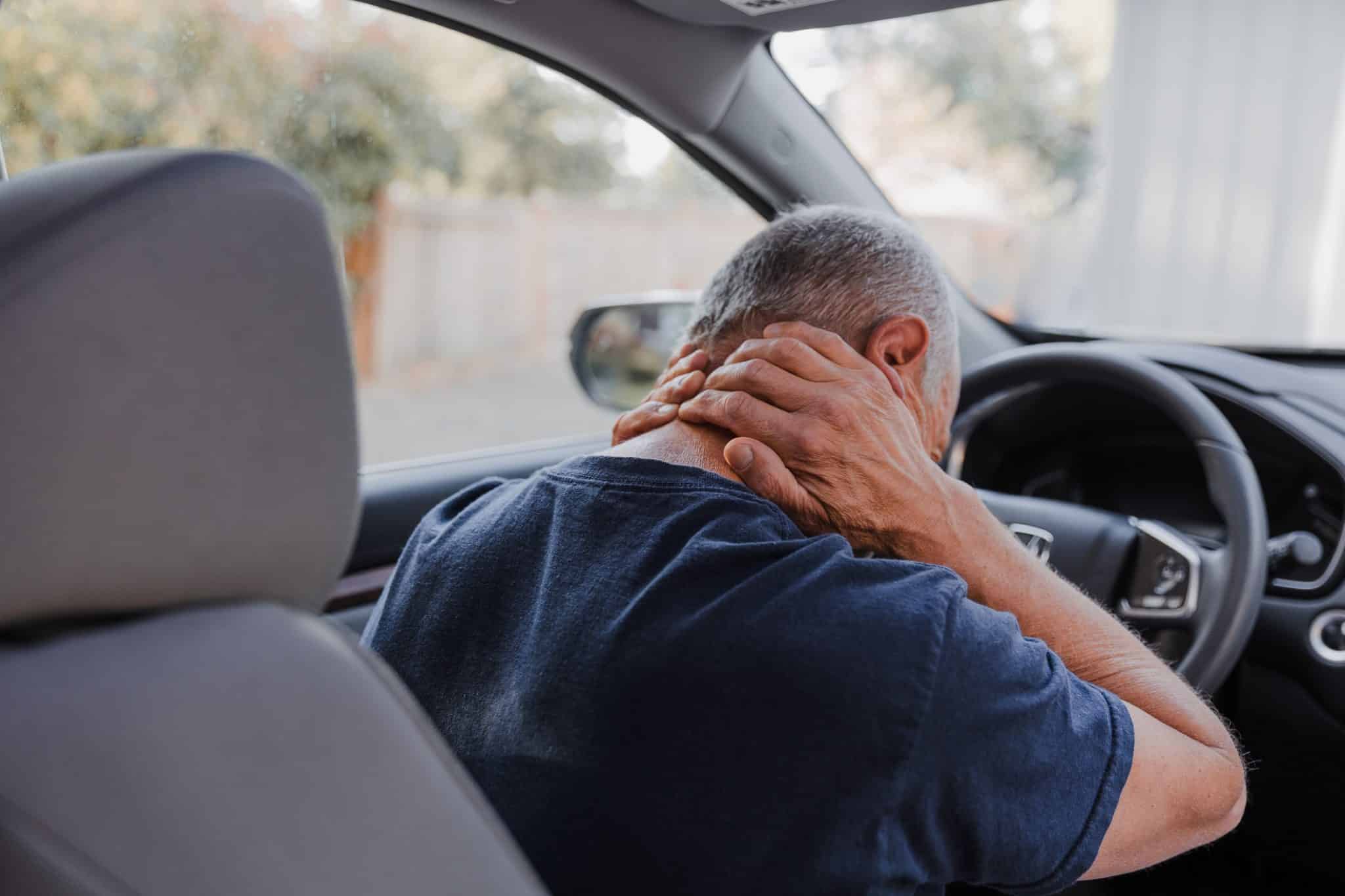
A Concussion That Does Not Show on a CT Scan Is Still a Brain Injury
The emergency room told you the scan was clear. Weeks later you are still losing words mid-sentence, still sleeping poorly, still turning down the radio because the noise is too much. Someone has probably already suggested that if the imaging looked normal, nothing is really wrong.
That assumption is medically incorrect. New York courts have said so. A clear CT scan does not mean your brain was not injured. It means the injury you sustained is not the kind a CT scan was designed to find.
If you are dealing with lasting symptoms after a head injury, the traumatic brain injury lawyers at Martin+Colin, P.C. can explain what the law requires you to prove and how it is proven. Call (914) 771 7711 para una consulta gratuita.
What a CT Scan Actually Looks For
A CT scan after a head injury is mainly used to look for emergencies such as brain bleeding, skull fractures, and dangerous swelling. A normal CT scan is good news, but it does not rule out a concussion or mild traumatic brain injury (TBI).
Los National Institute of Neurological Disorders and Stroke (NINDS) explains that current imaging tests cannot always detect damage from mild concussive injuries. The Centers for Disease Control and Prevention (CDC) similarly notes that a brain scan is not normally needed to diagnose a mild TBI or concussion. Instead, CT scans are often used to check for bleeding or other serious injuries.
Why? A concussion can disrupt brain function at a microscopic level. That damage is often invisible on a standard scan. A survey of advanced neuroimaging in mild traumatic brain injury, published through the NIH’s National Center for Biotechnology Information (NCBI), explains that conventional CT and MRI can miss subtle brain changes, including diffuse axonal injury.
The bottom line: a normal CT scan does not mean you do not have a concussion. It means the scan did not find the types of structural injuries it was designed to detect.
New York Law Requires Objective Evidence
Under New York’s no-fault insurance law, a person hurt in a car accident usually must show a “serious injury” under Insurance Law § 5102(d) before they can recover money for pain and suffering. Insurance companies may argue that a normal CT scan means a concussion is not serious enough. New York’s highest court has not agreed with that argument.
In Toure v. Avis Rent A Car Systems (2002), the New York Court of Appeals ruled on this question. Your symptoms alone may not be enough to prove a serious injury. But New York law does not require a positive CT scan or any one specific medical test. A doctor can support the diagnosis with other objective medical evidence.
The Court made this point again in Perl v. Meher (2011). A doctor can support a serious injury claim with medical evidence. That evidence needs to show how the injury limits the person compared with normal function.
The bottom line is simple: a normal CT scan does not automatically defeat a New York concussion claim. What matters is whether a qualified medical expert can back up the diagnosis and show how the brain injury has affected the person’s ability to function.
New York Courts Have Called Concussion an “Invisible Injury”
A normal brain scan does not rule out a concussion, traumatic brain injury, or post-concussion syndrome. New York law allows concussion claims to be supported by symptoms, medical history, neurological exams, neuropsychological testing, and other clinical evidence.
In Murgia v. Smith (2021), the court described concussion as an “invisible injury;” while legitimate, it often does not appear on diagnostic imaging. New York courts expect doctors to diagnose a concussion based on symptoms, medical history, and neurological findings. The court found enough evidence of a serious brain injury for the case to proceed.
Other New York courts have reached the same conclusion; in Rodman v. DeAngeles (2017), the court reinstated a jury verdict for a plaintiff with a serious concussion even though her scans were negative. In Guzman v. 4030 Bronx Blvd. Assoc. L.L.C. (2008), the court allowed evidence of traumatic brain injury based on neuropsychological testing even though CT scans were negative.
American courts have also acknowledged that TBIs can have serious and lasting consequences. In Castillo v. MTA Bus Co.(2018), the court upheld $1.5 million in past and future pain-and-suffering damages for a plaintiff whose post-concussion syndrome was expected to affect her for the rest of her life.
What Objective Evidence of a Concussion May Look Like
A concussion may not appear on a CT scan or MRI, but that does not mean there is no objective evidence of the injury. In a New York concussion claim, several types of evidence can help prove a traumatic brain injury:
- Neuropsychological testing: Tests can measure memory, attention, processing speed, and other cognitive problems. In Flanders v. National Grange Mut. Ins. Co. (2015), the court found that standardized neuropsychological testing provided objective evidence of cognitive impairment and could support a significant limitation claim.
- Clinical neurological findings: Doctors can document problems with balance, coordination, eye movement, visual tracking, and other neurological functions. These findings helped support the concussion claim in Murgia v. Smith (2021).
- A consistent treatment record: Medical records from emergency care, primary care, neurology, and concussion rehabilitation can show that symptoms began after the accident and continued over time. Unexplained gaps in treatment can make a concussion claim harder to prove.
- Advanced brain imaging: In some cases, diffusion tensor imaging (DTI) and other advanced tests may detect changes that conventional CT scans or MRIs do not. These tests are not necessary or appropriate in every concussion case.
- Lay testimony about function: Family members, employers, teachers, and others may be able to document changes in memory, personality, work performance, school performance, or everyday functioning. In Snyder v. Daw (2019), the court recognized post-concussion syndrome, post-traumatic headaches, and cognitive dysfunction as injuries that may support a significant limitation claim.
Together, this evidence can help establish a concussion or traumatic brain injury even when standard brain imaging is normal.
Why New York Concussion Claims Get Dismissed
New York courts regularly dismiss traumatic brain injury claims when there is not enough medical evidence to support them. A normal CT scan is not necessarily the problem; the bigger issue is when there is little objective evidence beyond the injured person’s reported symptoms, without supporting evidence like the items listed above.
Medical records should reflect what the injury is actually keeping you from doing. If a concussion prevents you from working, driving, caring for your family, exercising, or handling other normal activities, those limitations can be important evidence in a New York brain injury case.
In many New York concussion cases, the medical record can make the difference between a dismissed claim and a substantial recovery. Martin+Colin, P.C. knows what that record needs to look like before the gaps become a problem an insurance company can exploit. Call (914) 771 7711 for a free consultation.
New York’s Serious Injury Threshold Applies Mainly to Motor Vehicle Cases
One point that is often misunderstood is that the serious injury threshold is a feature of New York’s no-fault automobile insurance system. It governs claims arising from motor vehicle use, including car accidents, rideshare collisions, hit-and-run crashes, y trucking accidents.
It does not apply to a head injury from a fall on a poorly maintained stairway, from a dropped tool on a job site, or from defective equipment. If you struck your head in a slip and fall, a construction accident, a scaffold collapse, a ladder fall, or because of a defective product, you still must prove the injury and its cause, but you do not have to clear the § 5102(d) threshold. Injured workers may also have overlapping workers’ compensation rights alongside a third-party negligence claim.
What To Do If Your Scan Was Clear and You Still Feel Wrong
- Return to a doctor and be specific. Report every symptom, including the ones that feel too minor or too embarrassing to mention. Irritability, light sensitivity, word-finding trouble, and changes in sleep all belong in the chart.
- Ask for a referral to a concussion specialist or neuropsychologist. Formal testing is what converts your experience into evidence.
- Keep a daily symptom journal. Note what you could not do, what you had to stop doing, and how long it lasted. Contemporaneous notes are far more persuasive than a recollection assembled two years later.
- Document the effect on work and daily life, including missed shifts, reduced duties, dropped classes, or help you needed at home.
- Do not give a recorded statement to an insurance adjuster describing yourself as fine before you know whether you are.
- Understand your deadlines. Most New York personal injury actions are governed by a three-year statute of limitations under CPLR 214. Claims against a municipality or public authority, including a city bus or a public works project, generally require a notice of claim within 90 days of the incident. Waiting is the most common and most costly mistake.
Talk to a White Plains Concussion and Brain Injury Lawyer
Concussion cases are won on the quality of the medical record and the credibility of the people who explain it. Martin+Colin, P.C. has represented injured people in Westchester County, New York City, and the Hudson Valley for decades, working with treating physicians, neuropsychologists, and accident reconstruction experts to prove injuries that an insurance company would prefer to call invisible.
If a scan came back clear and your life has not, we should talk. Review our personal injury practice areas or póngase en contacto con Martin+Colin, P.C. for a free consultation. Call (914) 771 7711.
Preguntas Más Frecuentes
Can I have a brain injury if my CT scan was normal?
Yes. A CT scan is designed to detect bleeding, fractures, and swelling. The microscopic nerve fiber damage and chemical disruption that cause concussion symptoms generally do not appear on it. The CDC states that a scan is not needed to diagnose a mild traumatic brain injury.
Is a concussion the same thing as a traumatic brain injury?
Yes. A concussion is a mild traumatic brain injury. The word “mild” describes the initial clinical presentation and the risk to your life in the first hours after the trauma. It says nothing about how long your symptoms will last or how severely they will affect your work and your relationships.
What is post-concussion syndrome?
Post-concussion syndrome refers to concussion symptoms that persist well beyond the expected recovery window, commonly headaches, dizziness, cognitive difficulty, light and noise sensitivity, sleep disruption, and mood changes. New York courts have recognized that these persistent symptoms can constitute a qualifying injury, and in Castillo the Second Department sustained a seven-figure award for lifelong postconcussive syndrome.
How do you prove a concussion in court?
Several types of evidence work together: neuropsychological testing measured against population norms, documented clinical findings, a consistent treatment history, advanced imaging where needed, and testimony from people who knew you before and after. Under Perl v. Meher, a qualified expert’s assessment satisfies the standard when it has an objective basis and compares your limitations to normal function.
How long do I have to bring a claim in New York?
Generally three years from the date of the accident for a personal injury action, and two years for a wrongful death claim. Claims against municipal defendants require a notice of claim within 90 days. Because the evidence in a concussion case depends heavily on early medical documentation, the practical deadline for building a strong case is much shorter than the legal one.
Still have questions about your specific injury? Call Martin+Colin, P.C. at (914) 771 7711. The consultation is free.
Related reading
Ready to hire the very best lawyers to handle your case?
Ready to hire the very best lawyers to handle your case?

Bill Martin
I founded Martin+Colin, P.C., a White Plains personal injury firm that has recovered millions of dollars for injured people across New York. Over my career, I've represented clients in some of the most serious accident cases the state sees: construction and demolition worker injuries, workplace accidents, and motor vehicle crashes involving cars, trucks, motorcycles, and pedestrians. My practice also covers premises liability and landlord negligence claims, from slip-and-fall and knockdown injuries to harm caused by broken steps and missing handrails. In every case, my focus is the same: holding negligent parties accountable and making sure injured clients and their families get the full compensation they're owed. My clients work with me because I combine a proven record of results with a straightforward, no-nonsense approach. I explain the process in plain terms, I fight hard for every client, and I treat each case with the attention it deserves. If you've been hurt in an accident, contact me and the team at Martin+Colin, P.C. for a free consultation.


