
Demolition Accidents in New York: Who’s Responsible When Things Go Wrong?
When demolition work goes wrong, the consequences can be catastrophic. Workers can suffer severe injuries from structural collapses, falling debris, explosions, or defective equipment. Understanding who’s legally responsible for these accidents matters for recovering full compensation.
Demolition projects involve multiple parties including property owners, general contractors, subcontractors, equipment operators, and designers. New York law requires each of these groups to fulfill their duties. When one fails, injured workers deserve answers and accountability.
What Is a Demolition Accident?
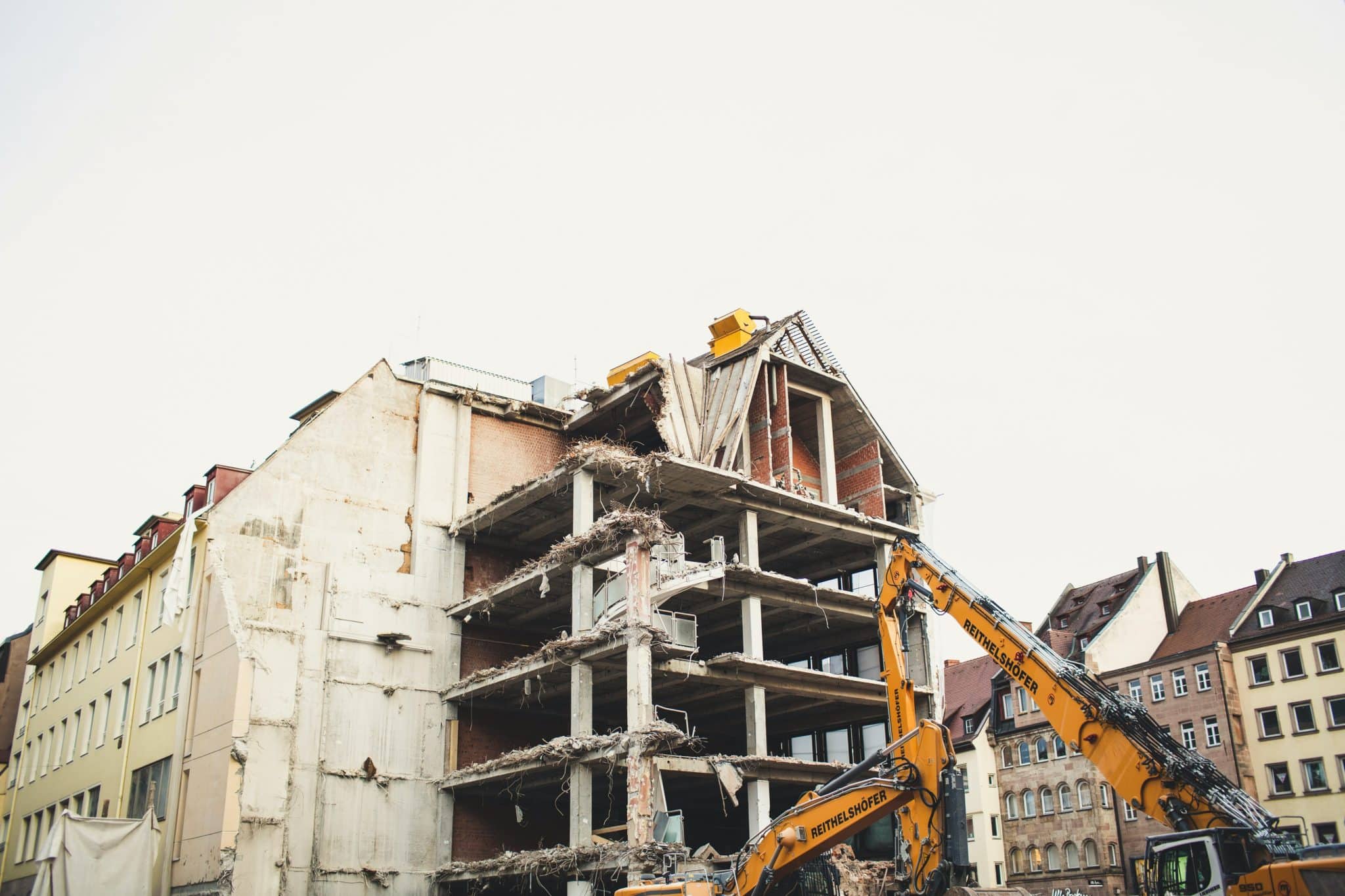
A demolition accident happens when demolition work injures someone during the destruction, dismantling, or removal of a building, wall, or structural component. These accidents can happen in:
- Partial or full structural collapse
- Falling debris or materials
- Equipment mishaps (wrecking balls, excavators, explosives)
- Unsafe dismantling procedures
- Unexpected material failures
Los U.S. Bureau of Labor Statistics (BLS) reports that fall-related and struck-by injuries are common in demolition environments, especially when hazards go unaddressed.
Demolition sites are inherently dangerous. Without proper planning, training, and safety devices, workers face significant risks.
Key Parties Potentially Responsible for Demolition Accidents
In New York, who is responsible for a demolition accident often depends on who controlled the worksite. It also depends on who did not follow safety standards.
General Contractors
General contractors oversee overall planning and execution of demolition. They control safety procedures, subcontractor coordination and site-specific hazard assessments.
When a general contractor fails to enforce adequate safety measures, the law may hold them liable.
Subcontractors
Demolition work is frequently delegated to subcontractors. Even when subcontracted, a general contractor can still be responsible for unsafe practices. This happens if they do not supervise or enforce industry standards.
Property Owners
Owners who commission demolition must ensure that the work complies with codes and safety requirements. If owners hire unqualified teams or ignore recognized hazards, this can be a liability factor.
Equipment Operators
Operators of heavy machinery such as wrecking balls, excavators, or jackhammers must follow procedural and safety protocols. If operator negligence causes injury, they can be responsible.
Designers and Engineers
In some demolition projects, structural engineers or designers determine how load-bearing elements are removed. If their plans were faulty or put workers at risk, they may share liability.
Legal Standards That Apply in New York Demolition Cases
New York employs multiple legal frameworks to assign responsibility in demolition accidents. Understanding these helps clarify who may have to pay compensation.
1. New York Labor Law § 240(1)
Often called the “Scaffold Law,” this statute requires owners and contractors to provide proper fall protection for elevation-related work, including demolition that involves structure removal at height. Violations create strict liability, which allows injured workers to recover compensation without proving negligence.
This law is especially relevant when a demolition accident involves falls from elevated structures, falling material hazards due to missing safeguards, or improperly supported work platforms.
2. New York Labor Law § 241(6)
This section incorporates the Industrial Code, which sets detailed safety standards for construction and demolition. If a specific safety statute applies (for example, requirements for demolition practices), violations can support a claim.
Both §§ 240(1) and 241(6) can apply in the same case, and legal counsel will need to evaluate how they interact.
3. Common-Law Negligence
Where statutory protections do not apply, injured workers or third parties can bring a negligence claim. This requires showing a duty of care, a breach of that duty, causation, and damages.
This framework often applies to equipment operators, subcontractors, or designers whose actions fall outside the strict liability statutes.
Third-Party Responsibility in Demolition Accidents
Demolition accidents often involve multiple liable parties. For example, a general contractor fails to enforce safety protocols, a subcontractor misuses heavy equipment, an equipment manufacturer supplies a defective tool, or a designer plans an unsafe demolition sequence.
In such cases, injured workers can pursue compensation from one or more responsible parties.
Los Occupational Safety and Health Administration (OSHA) sets federal safety guidelines that contractors must follow to minimize demolition hazards including training, hazard communication, and safe equipment use. Failure to follow these standards can support claims of employer or contractor negligence.
Evidence That Establishes Liability After a Demolition Accident
Proving responsibility requires a detailed investigation. Attorneys often collect site inspection reports, witness statements, safety logs, and OSHA records. They also gather equipment maintenance history, structural plans, and engineers’ notes. Additionally, they take photographs of debris and collapse patterns, as well as medical records that show injuries.
This evidence helps determine whether a party’s action (or inaction) led to the accident.
What Compensation Injured Workers May Recover
When a demolition accident causes injury, those at fault may have to pay for medical bills. This includes past and future expenses. They may also owe for lost wages and earning ability. Other costs can include rehabilitation, therapy, pain, suffering, and permanent disability or scarring.
In New York, people hurt in construction site accidents can get workers’ compensation benefits. However, these benefits do not cover non-economic losses, such as pain and suffering. A separate civil claim may be necessary to recover full damages.
What to Do If You Are Injured in a Demolition Accident
If you or a loved one suffer a demolition-related injury, take these steps to protect your health and legal rights:
- Seek medical attention immediately.
- Report the accident to your supervisor or site manager.
- Take photos of the scene, debris, and equipment.
- Document witnesses and weather or lighting conditions.
- Preserve any safety logs or employer communications.
- Avoid providing recorded statements to insurers until advised.
- Consult an experienced demolition accident attorney.
Taking prompt action preserves evidence and strengthens your legal claim.
How a Demolition Accident Attorney Helps
A qualified attorney reviews every aspect of your case to identify liable parties, collect and preserve critical evidence, analyze compliance with Labor Law and OSHA standards, coordinate multiple claims (workers’ comp and civil claims) and negotiate with insurers on your behalf.
Demolition accident law is complicated. Having experienced legal help can ensure you get the full compensation you deserve under New York law.
Talk With a New York Demolition Accident Attorney
Demolition site accidents can change lives. When they do, everyone involved deserves clear answers about responsibility and accountability.
If a demolition accident injured you, responsible parties such as contractors, owners, operators, or designers may owe you compensation.
Consult an attorney at Martin + Colin, P.C. who understands both New York’s construction safety laws and demolition accident liability to protect your rights and pursue justice.

Bill Martin
I founded Martin+Colin, P.C., a White Plains personal injury firm that has recovered millions of dollars for injured people across New York. Over my career, I've represented clients in some of the most serious accident cases the state sees: construction and demolition worker injuries, workplace accidents, and motor vehicle crashes involving cars, trucks, motorcycles, and pedestrians. My practice also covers premises liability and landlord negligence claims, from slip-and-fall and knockdown injuries to harm caused by broken steps and missing handrails. In every case, my focus is the same: holding negligent parties accountable and making sure injured clients and their families get the full compensation they're owed. My clients work with me because I combine a proven record of results with a straightforward, no-nonsense approach. I explain the process in plain terms, I fight hard for every client, and I treat each case with the attention it deserves. If you've been hurt in an accident, contact me and the team at Martin+Colin, P.C. for a free consultation.


